
Is your state making the grade?
DENVER—A new report projects that in five years, 29 states will guarantee personal finance education for every graduating public high school student. Less than two decades ago, just three states offered a guarantee. The 2026 National Report Card on State Efforts to Improve Financial Literacy in High SchoolsTM, issued by the National Endowment for Financial Education® (NEFE®), projects that by 2031, 73% of public high school students will live in a state where a semester-long course in personal finance will be guaranteed to every graduating student.
The 2026 report card shows that 10 states have already earned an A grade, and 19 are projected to earn an A grade by 2031. The percentage of states receiving C, D and F grades dropped from 40% to 14% in this year’s report card. By 2031, just two states are expected to have an F grade on the report card.
NEFE is issuing this sixth report card, which reflects how well personal finance is taught in high schools. The previous five report cards were issued by the Center for Financial Literacy (CFL) at Champlain College in Burlington, Vt. The first report was issued in 2013. Beginning with this latest edition, NEFE assumes responsibility for the report card, expanding its reach and influence as a leading measure of state-level financial education policy for years to come.
“The National Endowment for Financial Education is committed to ensuring access to effective financial education for all Americans, and research tells us requiring foundational personal finance instruction in high school is among the most impactful ways to do so,” says Billy Hensley, Ph.D., president and CEO of NEFE. “The progress across our field is encouraging, but the work ahead requires continued collaboration, evidence building and investment in the systems that support learners and educators. The report card is one of the most compelling tools available to build and sustain momentum across states to adopt and effectively implement these critical programs.
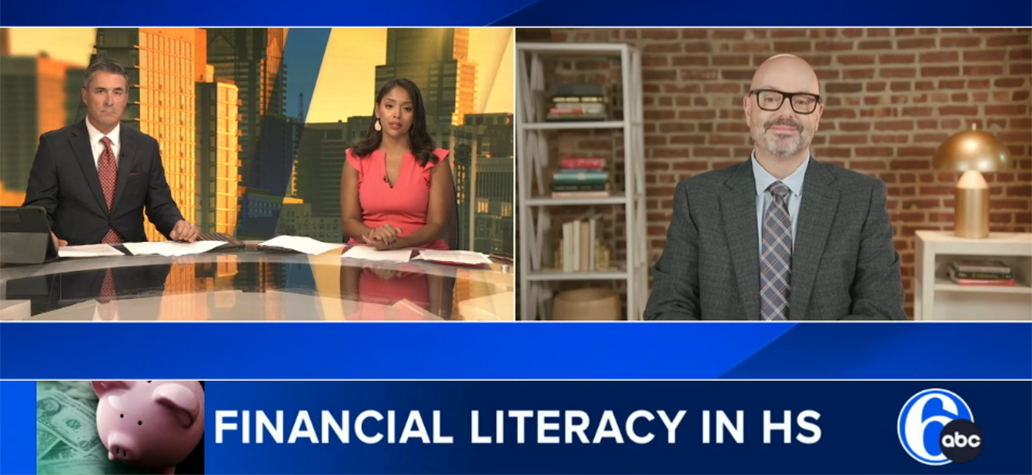
John Pelletier, senior fellow at NEFE, projects that when the Class of 2031 graduates, 29 states will require high school students to take a standalone personal finance course, with an estimated 73% of public high school students who graduate in 2031 taking a substantive personal finance course prior to graduation. When the first report card was issued in 2013, only three states earned an A grade, representing just 5% of students in the nation’s public schools.
“Financial literacy is linked to positive outcomes like wealth accumulation, stock market participation, effective retirement planning and avoiding high-cost alternative financial services. Conversely, poor financial literacy and negative financial behaviors often go hand in hand,” says Pelletier. “High school personal finance education can help alleviate the cycle of poverty that exists in our nation. Requiring all students to take a standalone financial literacy course, regardless of their race, ethnicity or economic status, is an important step our nation can take toward reducing inequality.
A 2025 nationwide opinion poll from NEFE found that 83% of U.S. adults believe the state they live in should require a semester- or year-long course focused on personal finance as a graduation requirement, while 82% of respondents who attended high school say they wish they were required to complete a personal finance class while they were in school.
Hensley adds “NEFE’s data reflect strong public support for financial education in high school. The vast majority of Americans agree their state should require a semester- or year-long course for graduation, and that personal finance is equally as important as core subjects like math, science and English. Furthermore, most Americans believe the quality of their financial life would be better had they received financial education in school,
As momentum for personal finance education grows, teacher training will become more important. The CFL projects that 37,000 highly trained personal finance educators in just the grade A and B states will be needed by 2031. To produce the report card, NEFE conducted detailed reviews of high school graduation requirements, state academic standards for personal finance education, and laws, regulations and guidelines related to how each state delivers personal finance education in its public high schools. A national map with information on the 50 states and the District of Columbia and a downloadable copy of the full report card is available here.
About the National Endowment for Financial Education
The National Endowment for Financial Education (NEFE) is the independent, centralizing voice providing leadership, research and collaboration to champion effective financial education and advance financial well-being. NEFE has received national recognition for strengthening action-oriented research agendas, mobilizing intermediaries, and creating better solutions for researchers, educators, practitioners and policymakers. Beginning with the 2026 edition, NEFE assumes the administration of the National Report Card on State Efforts to Improve High School Personal Finance Education. For more, visit www.nefe.org.