

EXECUTIVE SUMMARY
- In 2026, three states and the District of Columbia took meaningful steps toward passing new personal finance graduation requirements, while 20 projected “A” states continued implementing their new requirements.
- The year has been defined by regulatory and administrative developments for state K-12 personal finance. States are actively deciding how to best implement these requirements in a way that is effective and equitable for all students.
- NEFE finalized a 2026-2028 strategic plan at the beginning of the year, explicitly naming policy priorities that reflect the landscape of policy developments bolstering financial education delivery for youth and young adults. These priorities address the need for scalable teacher training across the country, the important role of higher education institutions in supporting students' financial wellness and the opportunity to deliver financial education within workforce development systems.
INTRODUCTION
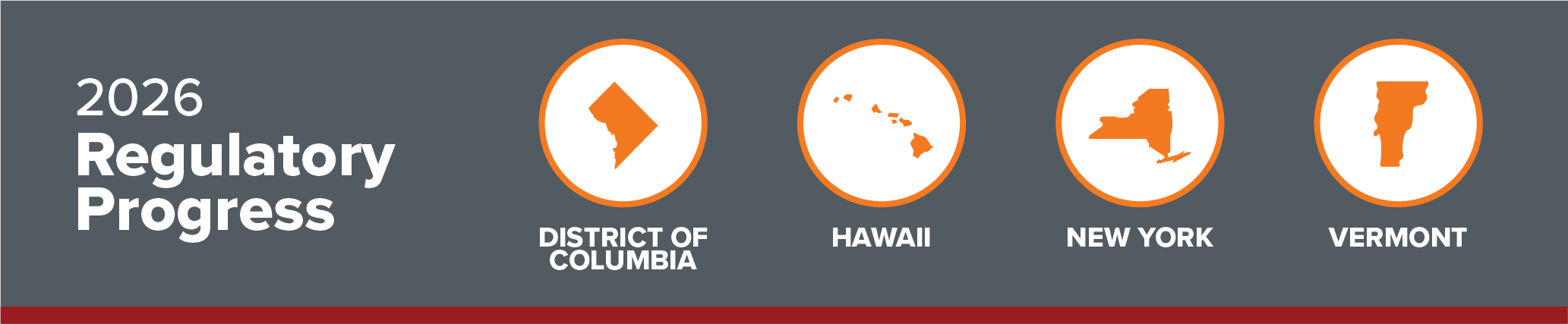
The decade-long national momentum behind financial education continues to expand access across the United States. In 2025, four states passed legislation to add personal finance as a graduation requirement for all high school students, marking another exciting year of progress. Though the 2026 legislative sessions concluded without new legislation passing, states across the country continued to enhance their K-12 financial education programs through regulatory changes. Hawaii, New York, Vermont and the District of Columbia all took steps toward new graduation requirements, while Ohio celebrated its first graduating class under requirements passed in 2022. Legislation establishing and codifying a full, standalone, semester-long personal finance course for graduation remains the gold standard, and states continue to move forward in actualizing these new requirements and moving closer to the goal of providing every high school student in the country with effective financial education. This national momentum raises the critical question of how states that currently lack grade “A” standalone requirements will adjust their policies to ensure that all students receive effective financial education and are not left disadvantaged compared to their peers in other states.
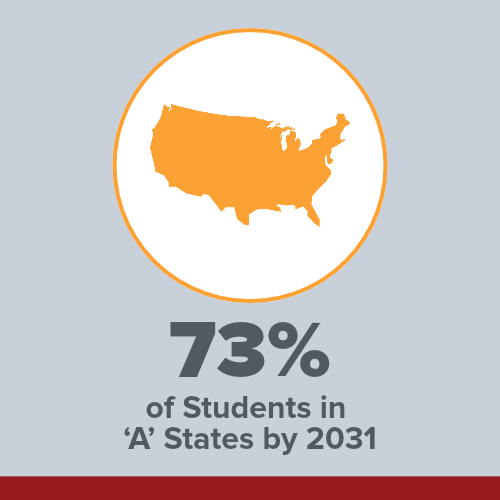
Earlier this fall, the National Endowment for Financial Education (NEFE) was thrilled to announce the acquisition of the National Report Card on State Efforts to Improve Financial Literacy in High Schools™. This report is a rigorous and widely respected authority on state efforts to provide financial education to high school students. For 13 years, John Pelletier (now a senior policy fellow with NEFE) has conducted thorough research on every state and the progress made during his time working on the National Report Card is striking. When the first National Report Card was published in 2013, only 5% of all high school students across the U.S. lived in a state where financial education was a requirement for graduation. With recent developments, that number is expected to jump to at least 73% by 2031.
Though state legislation has proven the most common means of expanding access to financial education to date, other ongoing state efforts have continued this national momentum. 2026 was marked as a year of regulatory changes that moved the ball forward in lieu of legislative action. Multiple state boards of education have been impressively responsive to their constituents, considering testimony and enacting new guidance on graduation requirements to include personal finance. Some state legislatures have kickstarted this process by ordering reviews of graduation requirements, such as the review currently being conducted by Maine’s Department of Education to evaluate how districts across the state are currently offering financial education.
In addition to this K-12 momentum, other policies supporting financial education continue to expand. State legislatures have increasingly included financial education components in draft legislation designed to support certain populations, such as foster youth, the formerly incarcerated and senior citizens. State treasuries have continued their mission of supporting economic empowerment for communities. Additionally, institutions of higher education have invested in financial wellness centers to assist students, while the federal government has taken action to expand existing financial education programming across dozens of government agencies. NEFE has consistently asserted that financial education is a lifelong journey shaped in multiple ways by a complex Personal Finance Ecosystem, and the organizational priorities outlined in our new strategic plan reflect these policy trends that impact young adults as they embark on their complex personal finance journeys.
K-12 REQUIREMENTS
REGULATORY PATHWAYS
With nearly all state sessions concluded, of the 21 states lacking a standalone personal finance graduation requirement, eight introduced and considered legislation to add such a requirement: Alaska, Hawaii, Illinois (session still active), Maryland, Massachusetts (session still active), New Jersey (session still active), New York, and Washington. Though none of these states passed a new requirement via legislation to date, NEFE observed movement across multiple other states that suggests the national momentum has continued through regulatory action.
- District of Columbia: In a multi-year process launched by the District of Columbia City Council, the State Board of Education and Office of the State Superintendent of Education (OSSE) were directed to consider new recommendations to revise graduation requirements. When the final recommendations were submitted after debate and revisions, they included a recommendation to add a half-credit financial literacy requirement. On Sept. 16, the board of education voted unanimously to adopt the new requirements and make financial literacy a required half-credit course for graduation. NEFE will continue to monitor implementation. If OSSE issues guidance to implement the new requirement as a standalone course, this would earn District of Columbia a projected “A” grade. However, guidance that the course can be embedded into other subjects would earn District of Columbia a “B” grade instead.
- Hawaii: In early 2026, the Hawaii State Board of Education, as part of a legislatively mandated review of state graduation standards, issued a final rule requiring personal finance instruction in high school. Under this new rule, which reflects broad stakeholder input, students will be required to complete a Personal Transition Plan that will include personal finance elements aligned with some of the National Standards for Financial Literacy. This change projects Hawaii to earn a “B” grade in 2030 after the state received a “D” grade in the 2026 National Report Card. However, two months after the board of education announced the new “B” grade requirement, the state legislature passed SR 192, requesting the board of education and department of education to make the new requirement a standalone personal finance course instead. This development, if acted upon, would potentially further upgrade Hawaii to an “A” grade.
- New York: After a multi-year regulatory effort in New York that involved the creation of a Blue Ribbon Commission on Graduation Measures, the state education department returned with a recommendation that personal finance be required instruction for graduation. In March 2026, the state Board of Regents finalized a new comprehensive set of graduation measures, including personal finance as a requirement. However, the language of the new requirement allows school districts to embed the required content into other courses, guidance similar to the previous economics graduation requirement, which included embedded personal finance concepts. Though the new personal finance instructional guidance expanding to include fourth- and eighth-grade students is a positive, the option for districts to embed content means many New York students will not be guaranteed to take a standalone course, which keeps New York at a “B” grade.
- Vermont: In 2025, the Vermont legislature passed Act 73, which initiated a comprehensive overhaul of the state’s public school system, including state-wide graduation requirements. At the end of that year, the Vermont Agency of Education recommended that the state implement a semester-long standalone personal finance course as part of the new graduation requirements. This would be the strongest option that would elevate Vermont to a grade “A” state with the graduating class of 2031. These recommendations are now in the hands of the state board of education, which has until July 2027 to finalize decisions on graduation requirements.
IMPLEMENTATION IS KEY
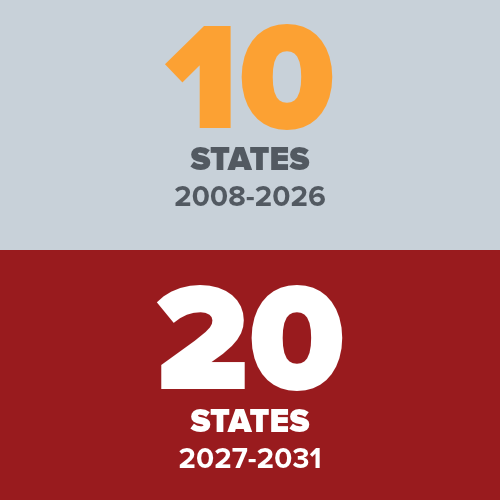
Across the country, early-adopter states continue to push forward their implementation efforts. 2026 marked an exciting year for Ohio, as the state celebrated its first graduating class under its new grade “A” graduation requirement. Furthermore, 2026 marks the last year that only one state will implement its new graduation requirement. From 2027-2031, 20 states are projected to finalize their implementation. To put this dramatic movement into perspective, 10 states have finalized the implementation of grade “A” requirements over the last 18 years. Doubling that progress in five years is remarkable, though it cannot be celebrated until implementation is complete.
The details of these requirements are often left to state agencies, as NEFE has highlighted in previous legislative reviews and a series of white papers focused on implementation. When conducting interviews for those publications, individuals who had held critical roles implementing requirements in multiple early-adopter states cited teacher training, curriculum curation, and funding as challenges.
Today, as these agencies begin their review and consider stakeholder engagement, many of the same concerns are raised, though we now have the benefit of research and implementation experiences that can address them. New requirements do not add additional credits for school administrators and teachers to squeeze in—they typically fit into an existing required credit in another subject (such as math or social studies) or replace an elective credit, as is the case in the new requirement passed in the District of Columbia. Though state legislatures should appropriate funds to support implementation and ensure optimal effectiveness, district budgets do not increase regardless of appropriations—instead, existing budget funds are reappropriated while foundations and nonprofits step in to provide teacher training and free curricula. Meanwhile, research has continued to demonstrate that programs that fall short of offering the equivalent of a full semester of standalone personal finance content (i.e., 60 hours of dedicated instruction) are less effective for students than the semester-long, standalone course. Additionally, states that provide flexibility for districts to embed personal finance effectively create inequitable access.
Among states that are actively implementing their new requirements, we see two general trends: states that stay true to legislative intent and best practice, and states that stray from a standalone course in the name of flexibility, falling short of an “A” grade. We have previously detailed the fork-in-the-road moment experienced in Oregon two years ago. When Oregon first began its implementation process, the state board of education strongly considered opting for an embedded requirement rather than a standalone course. After considering testimony, the state board of education made the laudable choice to respect the legislative intent of Senate Bill 3 and require a standalone course, reflected by the state’s projected grade “A” for the class of 2027. Michigan and Minnesota have taken a different route: as both states implement their new requirements for the class of 2028, they have issued guidance to districts stating that the requirement can be satisfied by embedding personal finance material in another course. Though both states passed legislation that was structured to put them on the path toward a grade “A” standalone requirement, the implementation process has jeopardized equitable access for their students. Not only do these embedded requirements pave the way for worse student outcomes, but they also do not address the issues they aim to alleviate.
We have focused on the importance of implementation as more states continue through their journey, while some states are just beginning. As we have seen, the passing of a requirement via legislation or regulation does not mark the finish line. NEFE remains committed to supporting states in opting for the strongest research-backed path that ensures equitable access and effective delivery. States must ask themselves the question; will we lead on this front, and provide future generations of our students with the foundational knowledge they need to pursue financial well-being best? Or will we opt for piecemeal solutions that do not serve all our students but may prove politically tolerable in the short term?
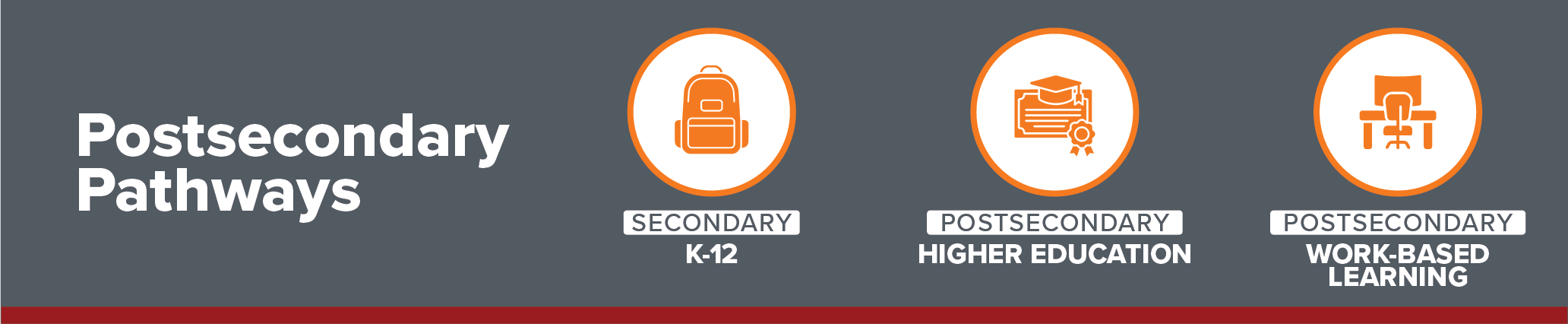
While NEFE has consistently advocated for high school graduation requirements, we recognize those programs do not yet reach all high schoolers, and that financial education is a lifelong need. For this reason, our Policy & Advocacy team has begun further exploration as to how postsecondary education systems can contribute to the financial education needs of youth and young adults. At the beginning of 2026, NEFE finalized a new strategic plan for 2026-2028. This plan includes a new portion specifically mentioning financial education in postsecondary and early-career spaces as a renewed area of focus for the organization. An increasing number of colleges and universities have begun offering financial wellness counseling on campus, recognizing the need for financial education for students navigating complex financial situations. These same institutions also train future secondary educators, many of whom will be tasked with teaching personal finance to their students.
Certain higher education institutions, like Stanford, offer personal finance electives for students that have seen sizable interest and demand. In Mississippi, the Institutions of Higher Learning adopted a new policy requiring colleges to expand offerings of financial literacy to all students. At the same time, this part of the field has become increasingly technical and sophisticated thanks in part to organizations such as the Higher Education Financial Wellness Alliance (HEFWA). While we have had consistent contact with many university systems for years and have remained engaged with financial wellness programs across campuses nationwide, this new strategic plan formalizes our engagement and focus. We also recognize that two-year and four-year colleges are not the only paths young adults take after high school, and work-based learning programs have continued to grow. Our Policy & Advocacy team has spent 2026 conducting research and discovery to better understand ongoing policy developments in this space, including the impact of the new Workforce Pell Grant program enacted under H.R.1 in 2025. With the finalization of our new strategic plan, NEFE has committed to increasing our engagement and understanding across this multifaceted postsecondary landscape.
FEDERAL POLICY – A NATIONAL ISSUE
State policies propelling financial education across secondary and postsecondary programs have the potential to offer life-changing interventions as financial lives become more complex. It is also a very popular policy: NEFE polling from 2025 found that 82% of respondents believed their state should require personal finance for graduation. However, that same poll also found that only 23% of respondents said they had been offered a personal finance course in high school and had taken it, while 61% said their high school did not offer one. This highlights a very clear need for U.S. adults across the country who have not had the benefit of a graduation requirement and who typically fall outside of the future-facing youth focus that has seen such significant momentum in states. Though they do offer the potential for sweeping progress, state policies are not where these efforts end.
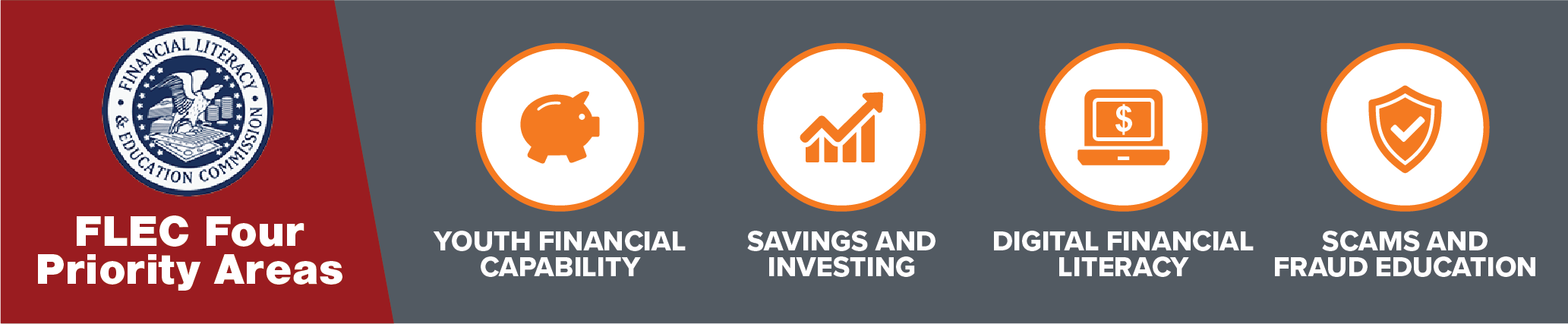
The federal government has played a role in delivering and supporting financial education to adults for decades. Founded in 2003, the Financial Literacy Education Commission (FLEC) has convened three times a year to discuss developments in the field. Chaired by the Secretary of the Treasury, the Commission consists of 24 member agencies, exhibiting how financial education is present across a wide variety of federal government services, including the Department of Defense, the Department of Housing and Urban Development, the Department of Labor and many more. Among the key duties of FLEC is drafting and publishing The National Strategy for Financial Literacy, a key strategic guiding document for the Commission and the financial education work of the agencies involved. This year, FLEC issued a Request for Information to inform the development of a new version of the National Strategy, which had last been revised in 2020. NEFE submitted comments to FLEC to inform the new strategy, which was finalized and published in October. The new National Strategy includes four priority areas: Youth Financial Capability, Saving and Investing, Digital Financial Literacy, and Scams and Fraud Education. These priorities were notably led by Youth Financial Capability, suggesting recognition by FLEC of how dramatically the landscape of K-12 financial education has shifted since the last strategy six years ago. The National Strategy also includes a “Questions for Researchers” section in each priority area, suggesting areas for analysis across the financial education field. Among the recommendations that we proposed was the need for programmatic and systemic evaluation of financial education, which is critical to expand and deepen our understanding of what works best and for whom. The National Strategy specifically identifies the need for this type of evaluation, and encourages federal agencies to increase their evaluative efforts while committing to enhancing communication across agencies. We find these inclusions and specific callouts encouraging, and look forward to collaborating with FLEC to provide research and support.
Another significant development in 2026 (also mentioned as a financial education opportunity in the new National Strategy for Financial Literacy) was the creation of 530A child savings accounts, or “Trump Accounts”. Though 530A accounts mirror other child savings accounts in many ways and differ in others, they include the unique detail of a $1,000 seed contribution to accounts for children born between Jan. 1, 2025, and Dec. 31, 2028. While we will not outline all the details of these accounts (though these points can be found in analyses by multiple financial institutions), NEFE welcomes the early inclusion of financial education modules in the new Trump Accounts application, and hopes to see Treasury expand upon these efforts to utilize this opportunity to provide additional financial education for families holding these new accounts.
CONCLUSION
The financial education movement continues to push forward, even in a year when no new state graduation requirements were passed via legislation. States continue to find alternative ways to expand K-12 financial education access, and even where states are not legislating on K-12, financial education is included in legislation affecting adults. State agencies, namely state treasuries, champion this work and continue to focus time and resources on financial empowerment initiatives that include financial education/counseling. Meanwhile, the federal government is reevaluating how to collaborate best and organize across dozens of agencies that support or deliver financial education. FLEC has notably prioritized the need for digital financial literacy in a world of rapidly evolving digital financial services, an area that has changed significantly since the last National Strategy for Financial Literacy in 2020. When the efforts of the federal government combine with the progress states are making on K-12, a comprehensive picture emerges of a reality where generations of future high school graduates receive effective financial education at a young age, and the adults who missed out on this opportunity are able to receive financial education through a combination of federal and state resources. In this critical moment, when policies are being adopted, revised and implemented in real time, the decisions made over just the next five years will have a significant impact on youth and adults across the country.
In a recent article, NEFE President and CEO Billy Hensley, Ph.D., makes the point succinctly:
“The future of financial education depends on our ability to rise to this challenge. NEFE is committed to leading, catalyzing and supporting this effort. Together, we can build professional infrastructure and support systems that ensure financial education is not just widely available, but continuously effective and equitable—helping every learner develop the skills, knowledge and confidence to thrive in an increasingly complex financial world.
This past year has been one of progress toward NEFE’s central mission of ensuring access to effective financial education for all, as system-level change for future generations continued through regulatory action and the financial education field contributed to the revision and evolution of a national strategy to serve people of all ages.
Hunter Field is the senior manager, Policy and Advocacy for the National Endowment for Financial Education (NEFE), a nonprofit foundation that champions effective financial education. NEFE is the independent, centralizing voice providing leadership, research and collaboration to advance financial well-being.